
Kyoto Review of Southeast Asia
  • Home – Issue 42
  • Reviews
  • Archive
  • Trendsetters
  • PUBLICATIONS
  • Videos
  • About
  • Committee
  • Contact
  • CSEAS
  • Facebook
  • YouTube
Homebr42

br42

Issue 42 Mar. 2026

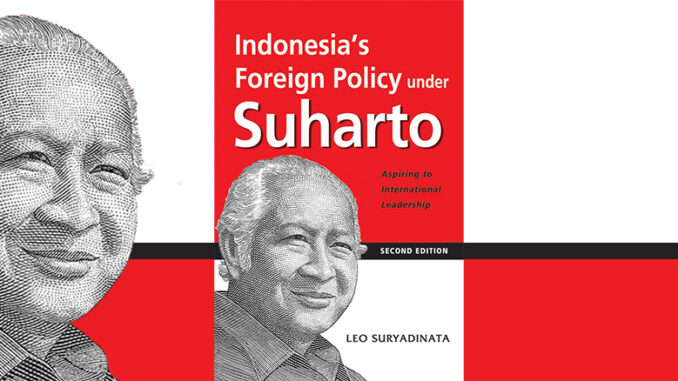
Review – “Indonesia’s Foreign Policy under Suharto: Aspiring to Indonesian Leadership”

Title: Indonesia’s Foreign Policy under Suharto: Aspiring to Indonesian Leadership  Author: Leo Suryadinata Publisher: Singapore: ISEAS-Yusof Ishak Institute, 2022 Leo Suryadinata’s book is among the very few books written on Indonesian foreign policy during the […]

Issue 42 Mar. 2026

Review – “Turning land into capital: Development and dispossession in the Mekong Region”

Title: Turning land into capital: Development and dispossession in the Mekong Region Editors: Philip Hirsch, Kevin Woods, Natalia Scurrah, & Michael B. Dwyer Publisher: University of Washington Press (2022) “Turning Land into Capital” examines the […]

Issue 42 Mar. 2026

Review – “Frontline Poets: The Literary Rebels Taking on Myanmar’s Military”

Title: Frontline Poets: The Literary Rebels Taking on Myanmar’s Military Authors: Joe Freeman, & Aung Naing Soe Publisher: River Books, (2025) Less than a month before he was killed, President Kennedy spoke in honor of […]

Issue 42 Mar. 2026

Review – “The Good Lord Willing and the Creek Don’t Rise: Pentimento Memories of Mom and Me”

Title: The Good Lord Willing and the Creek Don’t Rise: Pentimento Memories of Mom and Me Author: Robert W. Norris Publisher: Manchester: Tin Gate, (2023) Memoirs like this seldom make their way into the hands […]

Issue 42 Mar. 2026

Review – “Putting Women Up: Gender Equality and Politics in Myanmar”

Title: Putting Women Up: Gender Equality and Politics in Myanmar Editors: Netina Tan & Meredith L. Weiss Publisher: ISEAS – Yusof Ishak Institute, (2024) This is a much-needed book that examines women’s participation in Myanmar […]

Special Issue (Issue 38)

An Introduction — Health, Border, and Marginality: Toward Transdisciplinarity
Decha Tangseefa – Editor


The 47th Southeast Asia Seminar was held along the Thai-Myanmar border in the districts of Tha Song Yang, Mae Ramat, Mae Sot, and Phop Phra of Tak Province, Thailand, from December 7-14, 2023.

“A border is a “contact zone” of people, culture, and capital. With the Thai-Myanmar border, what engagement should a researcher have toward this kind of space?”

Critical counterpoints: Human-mosquito relations from the Thai-Myanmar borderlands to Singapore
Tomas Cole


The crime of caring
Vincen Gregory Yu, MD

(Health) care and family (Planning) of undocumented people along state borders
Miriam Jaehn

Circumventing undocumented-ness: Ethnic migrants along the Thai-Burma border pursue multiple mobilities
Siu-hei Lai

Experiences in temporary host countries and their impact on integrating resettled refugees
Jeonghyeon Kim

Enriching the land discourse from the Thai-Myanmar border
Yi-Chin Wu

The Mae La “Temporary Shelter Area” as migration infrastructure & (im)mobility of people on the move
Busarin Lertchavalitsakul

Intersections of health, border, and marginality: Field research enriches understanding of Japanese engagement with post-coup Myanmar
Hattori Ryuji

International relations research and borderland as inhabited space
Takahashi Tomoko

Older Past Issues

Kyoto Review of Southeast Asia Issue 27
KRSEA Beyond the Cold War in Southeast Asia
KRSEA-Issue-25-Lao-DPR
KRSEA-Issue-24-20-Years-After-Suharto

Trendsetters

  • The Indian Diaspora’s Political Awakening in Thailand

  • Japan’s Economic Security Strategy: A View from Southeast Asia

  • Voices from Vietnam: Perspectives on ISI and SCOPUS Predatory Journals

  • China’s Belt and Road Initiative: A Tool of Economic Growth or Hybrid Warfare?

  • A Birdlike Flock Moving Without a Leader: Social Networks and Economic Pressures in the 2025 Indonesia Demonstrations

  • A pragmatic approach towards peace in Southern Thailand

  • Rethinking China-Thailand Relations: Overseas Chinese and Knowledge Production during the Cold War

  • Could the KANP become the Philippines’ Move Forward Party?

  • Vietnam’s Nuclear Power Ambition during Putin’s Quick Visit

  • Navigating the Complexities: Challenges and Prospects of Collaborative Governance in Thai Local Administration

  • Limited language assistance for migrant workers in the Thai monolingual society

  • The US-Vietnam Comprehensive Strategic Partnership and Vietnam-US-China Relations

  • “Global South” and the Specter of History of Domination

  • Indonesia’s Future under Prabowo: Will be Better?

  • How the COVID-19 pandemic changed the perspective about women and leadership in responding to crises

  • Thailand’s Senate Election: More Bad News for Thaksin and Puea Thai?

  • Thailand: An Urban Country

  • Springing Forward: Myanmar’s Rising Momentum and the Imperative for Future Accountability

  • Praetorian Variations: The United States and Military Politics in Thailand and the Philippines

  • “Romancing” the Ballot: Public Housing in Singapore

  • Holding the Reigns: Steering development in Thailand

  • Ambivalent Alignment? The Sino-Russian Partnership and Thailand’s Perspectives on the Russo-Ukrainian War

  • Thai PM Srettha 100 Day Scorecard: Thailand is Open for Business

  • Thaksin’s Checkmate and the Unravelling of Thailand’s Constitutional Order

  • Why foreign MSMEs spontaneously promote CSR: A case of the oolong tea industry in Vietnam

  • The Absence of any Move Forward in Thailand

  • Seeking Love and Marriage in Japan Among Indonesian Migrant Workers

  • Bending with the Wind Again? Thailand’s Foreign Policy after the May Election

  • Digital repression of protest movements: #WhatshappeninginSoutheastAsia

  • Further reflection: Finding a balance between comfort zone and “new normal” teaching online

History with Documents: New Research on the Indonesian Left

The Indonesian left has always been on the defensive when it comes to the production of history. Though it is commonplace to associate anticommunism most strongly with the 32 years of Suharto’s Orde Baru or the New Order Regime (1966-1998), such a deep-seated political view has long been presupposing the Indonesian state and society since the late colonial period. Anticommunism has manifested [...]

Eroding Electoral Integrity: Reasons for Democratic Backsliding in Southeast Asia

In Southeast Asian countries that hold competitive elections, there has been a noticeable erosion of electoral integrity, leading to a regression in democracy since 2010. This has been evidenced by global democracy indexes.[1] In several of these countries, the traditional elites initially either choose to accept or endorse efforts to strengthen competitive multi-party democracy. Multi-party elections were accepted, in some instances, due [...]

Vietnam and Foreigners: Aspects and Experiences

Migration and cultural exchange have been lodestones of the civilization and society in ancient, middle-ages, and modern Vietnam. The cradle of civilization of Vietnam in the BCE days would have been located in the northern Red River Delta. Even at the nascent stage of its civilization had, as historian Corsi pointed out, the region witnessed constant cultural exchanges in three directions – between northern migrants from northern Chinese kingdoms and the locals in the Delta, between [...]
  • Home – Issue 42
  • Reviews
  • Archive
  • Trendsetters
  • PUBLICATIONS
  • Videos
  • About
  • Committee
  • Contact
  • CSEAS

Copyright © 2024 | Kyoto Review of Southeast Asia | All Rights Reserved

UA-21469080-8