
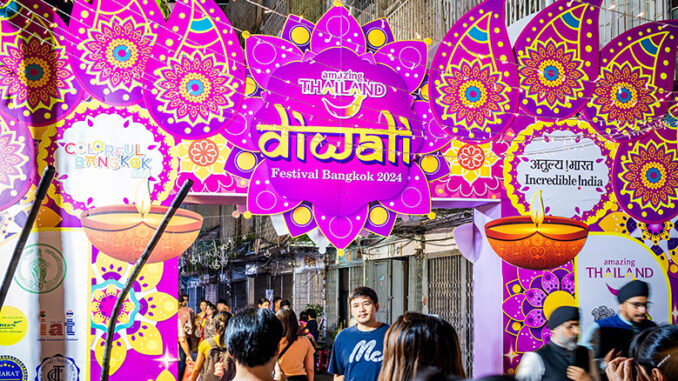
The Indian diaspora in Thailand stands at a critical juncture, marked by generational shifts that challenge decades of strategic political invisibility. While Baby Boomers, Generation X, and early Generation Y have traditionally maintained ultra-royalist positions, favoured the Democrat Party and operated within established monarchist frameworks, newer generations are beginning to chart different political territories. This transformation raises a fundamental question: Is the Indian diaspora’s political awakening in Thailand a sign of confidence or vulnerability—and what does their transition from monarchist loyalty to party politics reveal about the future of minority political participation in Southeast Asia?
Unlike their Chinese counterparts who have successfully integrated while maintaining distinct cultural identities, Indian Thais have pursued a more fragmented approach, prioritising economic assimilation over political visibility. The emergence of figures like Prem Singh Gill, the first Indian diaspora candidate to run for Thai general elections, signals a potential watershed moment that could redefine not only their community’s relationship with Thai politics but also the broader dynamics of minority political engagement in the region.
When Loyalty Becomes Liability
Benedict Anderson’s concept of “imagined communities” provides crucial insight into the Indian diaspora’s political evolution in Thailand. Anderson’s framework suggests that political communities are constructed through shared narratives and collective imagination—something the Indian diaspora has struggled to achieve independently. Their ultra-royalist positioning, while providing protective cover, has simultaneously prevented the development of a distinct political identity that could serve their community’s long-term interests. This creates what we might call an “assimilation paradox”: the very loyalty that provided security now constrains political evolution.
The fragility of this position becomes apparent when compared to Chinese diaspora strategies. Where Chinese Thais have maintained cultural distinctiveness while achieving economic and political integration, Indian Thais have chosen near-complete political assimilation at the cost of community-specific political advocacy. This difference reflects deeper questions about minority survival strategies in Southeast Asian political systems that privilege ethnic Thai identity while accommodating economic diversity.
Anderson’s analysis of Southeast Asian political formations suggests that successful minority integration requires the creation of new imagined communities that bridge ethnic identity with national belonging. The Indian diaspora’s current transition represents an attempt to construct such a community, but their inexperience in Thai political institutions creates significant vulnerabilities. Their traditional reliance on monarchist connections, while providing elite access, has left them unprepared for Thailand’s increasingly complex democratic landscape.

Beyond the Bamboo Ceiling
James C. Scott’s concept of “weapons of the weak” offers a compelling framework for understanding the Indian diaspora’s historical political strategy and its current limitations. Scott’s analysis of how subordinated groups navigate power structures reveals that the Indian diaspora’s political invisibility was itself a form of resistance—a way of avoiding the ethnic tensions that have periodically erupted in Thai politics. However, this strategy of “everyday resistance” through economic integration while avoiding political confrontation has reached its limits.
The arms trade connections mentioned represent a sophisticated form of what Scott might call “hidden transcripts”—powerful but invisible forms of political engagement that operate outside public scrutiny. These connections demonstrate that Indian diaspora business networks possess significant political capital, but their inability to convert this into visible political influence suggests fundamental misunderstanding of Thailand’s evolving political landscape.
Amy Chua’s work on “market-dominant minorities” provides additional analytical depth. Chua argues that economically successful minority groups often face backlash when they gain visible political power, particularly in democratising societies. The Indian diaspora’s cautious approach to political engagement reflects an intuitive understanding of these dynamics. However, Chua’s research also suggests that political invisibility cannot be maintained indefinitely economic success without political representation eventually creates unsustainable tensions.
The challenge for Thailand’s Indian diaspora lies in navigating what Chua identifies as the “trilemma” of democracy, free markets, and ethnic diversity. Their current political awakening must address how to maintain economic influence while building sustainable political coalitions that don’t trigger ethnic resentment. This requires moving beyond their traditional reliance on elite connections toward broader-based political engagement.
Reframing Minority Political Theory
Thailand’s Indian diaspora exposes a critical gap in minority political theory that has remained largely unexplored in academic literature: the phenomenon of the “missing middle” in minority political development. While existing scholarship has extensively analyzed two distinct models of minority political integration—the elite assimilation approach epitomized by successful Chinese diaspora communities, and the grassroots activism model demonstrated by various ethnic minorities fighting for recognition and rights—the Indian diaspora in Thailand represents an entirely different archetype that challenges these binary frameworks.
This “missing middle” manifests as communities that have achieved substantial economic success and social mobility yet remain politically inexperienced and institutionally disconnected from formal political processes. The roots of this disconnection run deeper than mere strategic choice—they are embedded in generational trauma and professional self-limitation that distinguishes them fundamentally from other successful minority communities.
The trauma component reveals itself most starkly in the persistent fear among many Indian diaspora members, particularly older generations, that political visibility could trigger deportation orders from the Thai monarchy. This fear persists despite the constitutional reality that the monarchy lacks such deportation powers, demonstrating how historical anxieties can override legal facts in shaping political behaviour. This “deportation trauma” creates what we might call “pre-emptive political withdrawal”—the avoidance of political engagement not because of actual threats, but because of imagined catastrophic consequences that feel historically plausible to communities that have experienced displacement.
Unlike the Chinese diaspora model, which combines economic achievement with sophisticated political integration across all levels of society, the Indian Thai community has created what we might term “economic citizenship without political citizenship.” They have mastered the art of wealth accumulation and social acceptance while remaining politically dormant—a combination that creates unique vulnerabilities and opportunities that existing theoretical frameworks fail to address.
The professional dimension of this limitation is equally revealing. Generation X Indian diaspora members, despite possessing strong legal backgrounds, have systematically channelled their expertise toward corporate law rather than constitutional or administrative law. This professional self-segregation reflects a deeper mentality of economic pragmatism over political engagement—corporate law offers immediate financial returns while constitutional law requires long-term political relationship building that feels too risky given their trauma-based worldview. This creates what we might call “expertise without application”—communities that possess the technical knowledge necessary for political participation but lack the psychological framework to deploy it effectively.
The contrast with Chinese diaspora professional strategies is illuminating. Where Chinese Thais have developed broad-spectrum approaches to wealth creation—from small and medium enterprises (SMEs) to top-tier political investments—Indian Thais have imposed artificial limits on their aspirations, creating a “mindset ceiling” that constrains their economic and political potential. Chinese diaspora success spans the entire socioeconomic spectrum precisely because they understood that sustainable wealth requires political protection, leading them to invest in both business networks and political relationships simultaneously.
The missing middle phenomenon is particularly dangerous because it creates what political scientists call “representation without taxation in reverse”—communities that contribute significantly to economic development and tax revenue while maintaining minimal political voice or institutional protection. This positioning makes them simultaneously invisible to political violence (because they pose no electoral threat) and vulnerable to policy changes (because they lack legislative allies). Their economic success becomes both shield and target, providing day-to-day protection while creating long-term exposure to populist mobilization or economic nationalism.
What makes the missing middle theoretically significant is its challenge to linear models of minority political development. Traditional frameworks assume that economic success naturally translates into political engagement, following what might be called the “American immigrant model” where successive generations move from economic survival to political participation. However, Southeast Asian political systems—with their complex ethnic hierarchies, authoritarian legacies, and patron-client networks—create incentive structures that can reward political dormancy even among economically successful minorities, particularly when that dormancy is reinforced by trauma-based decision making and professional self-limitation.
The Indian diaspora’s current political awakening represents a critical test case for understanding how missing middle communities navigate the transition from economic to political citizenship. Their lack of institutional knowledge, combined with significant economic resources and growing generational pressure for political voice, creates a unique form of political vulnerability that existing minority rights frameworks are ill-equipped to analyze or protect. Success or failure in this transition will not only determine their community’s future but could establish new paradigms for understanding minority political development in hybrid democratic systems across Southeast Asia.
This theoretical gap has practical implications beyond academia. Policymakers and civil society organizations working on minority rights issues often focus resources on either elite integration programs (assuming economic success leads to political integration) or grassroots mobilization efforts (assuming marginalized communities need empowerment from below). The missing middle requires entirely different interventions—political education for economically successful communities, trauma-informed approaches to political engagement, professional reorientation programs that bridge corporate and constitutional expertise, and coalition-building strategies that leverage economic networks for democratic engagement without triggering backlash.
The Gill Effect: Catalysing Generational Political Realignment
The candidacy of Prem Singh Gill has triggered a remarkable political realignment within Thailand’s Indian diaspora that extends beyond simple generational divides. From Generation Y onwards, and notably including a significant portion of Generation X, there has been a dramatic shift in political allegiance toward the People’s Party following Gill’s emergence as a parliamentary candidate. This represents perhaps the most significant political mobilisation in the community’s modern Thai history.
However, this political awakening has revealed the stark reality of the diaspora’s outsider status in Thai political consciousness. Native Thai perceptions of Gill as an “outsider” highlight the awkward timing of this political emergence—arriving just as the community begins to transition from decades of strategic invisibility toward active political participation. This perception gap underscores the fundamental challenge facing the Indian diaspora: how to establish political legitimacy in a society where their assimilation process is still in its nascent stages.
The contrast with the Chinese diaspora’s political integration becomes even more pronounced in this context. Chinese Thais have achieved remarkable political penetration across all sectors of Thai society, from business and politics to academia and civil service. They have mastered the art of maintaining cultural distinctiveness while achieving complete political integration—a model that offers crucial lessons for the Indian diaspora’s political development.
Learning from the Chinese Model: Strategic Political Integration
The Chinese diaspora’s success in Thai politics offers a masterclass in minority political integration that the Indian diaspora must study closely. Chinese Thais can be found in every sector of Thai society, from prominent political figures to influential business leaders, all while maintaining their cultural identity. Their approach demonstrates several key strategies that the Indian diaspora has yet to master.
First, Chinese Thais developed multi-generational political strategies that allowed for gradual integration without triggering ethnic backlash. They built political capital through consistent participation in Thai institutions rather than sudden emergence. Second, they mastered the art of coalition-building across ethnic lines, making themselves indispensable to Thai political networks rather than remaining peripheral players.
Most significantly, Chinese Thais understood the importance of political visibility combined with cultural adaptation. They never attempted the complete assimilation strategy that Indian Thais pursued, instead maintaining distinct cultural practices while fully engaging in Thai political processes. This balance allowed them to serve as bridges between Thailand and the broader Chinese diaspora network while remaining unquestionably Thai in their political loyalties.
The Next Generation’s Dilemma: Innovation or Integration?
Arjun Appadurai’s theory of “scapes”—the cultural flows that shape global diaspora communities—illuminates the generational tensions within Thailand’s Indian diaspora. Appadurai’s concept of “ideoscapes” (flows of political ideas) and “ethnoscapes” (flows of people and cultural practices) helps explain why younger generations are challenging their elders’ political strategies. Global connectivity has exposed younger Indian Thais to alternative models of minority political participation, creating pressure for political innovation.
The generational shift from ultra-royalism toward party politics reflects what Appadurai calls “diasporic identity work”—the ongoing process of negotiating between homeland connections, local integration, and global cultural flows. Younger Indian Thais are increasingly influenced by Indian political discourse, global democracy movements, and regional minority rights activism, creating tension with their elders’ assimilationist approach.
However, Appadurai’s analysis also reveals the risks of this transition. His concept of “anxiety of incompleteness” suggests that diaspora communities often struggle with political identity when they cannot fully claim either homeland or host country political traditions. Thailand’s Indian diaspora faces this challenge acutely—they cannot simply adopt Indian political strategies, nor can they easily integrate into ethnic Thai political networks.
The solution, according to Appadurai’s framework, requires creating new forms of “diasporic citizenship” that combine local political engagement with transnational cultural identity. This means developing political strategies that acknowledge their unique position as a minority community with distinct interests while contributing to broader Thai democratic development.
Steven Levitsky and Daniel Ziblatt’s research on democratic resilience provides the final piece of this analytical puzzle. Their work on how democracies survive suggests that successful minority political integration requires building what they call “institutional forbearance”—informal norms that prevent majority groups from using their power to exclude minorities. Thailand’s Indian diaspora must help build these norms while simultaneously developing their own political capacity.
Levitsky and Ziblatt’s analysis suggests that minority political breakthrough requires both institutional knowledge and coalition-building skills. The Indian diaspora’s current political inexperience represents a significant vulnerability, but their economic networks and generational energy provide foundation for political development. Success will depend on their ability to learn Thailand’s political institutions while building bridges across ethnic and class lines.

Progress and the Price of Political Awakening
Thailand’s Indian diaspora stands at a crossroads that exposes fundamental contradictions in Southeast Asian minority political development, challenging both their community’s future trajectory and Thailand’s broader democratic evolution. Their transition from monarchist loyalty to party politics represents neither simple progress nor mere political maturation, but rather a dangerous experiment in post-trauma political emergence that could either catalyze unprecedented minority political integration or trigger a devastating backlash that destroys decades of economic achievements.
The Gill candidacy has demonstrated both the transformative potential and the existential limitations of the current approach. While it has successfully catalyzed political mobilization across generational lines, the widespread perception of “outsider status” reveals the community’s continued political fragility and exposes the hollowness of their previous assimilation strategy. More critically, it has revealed that their economic success was built on a foundation of political invisibility that cannot be sustained once they seek visible political representation. The very visibility required for democratic participation contradicts the survival strategy that enabled their economic accumulation.
This creates what we might call the “visibility paradox”—their economic achievements require political protection to remain sustainable, but seeking political protection threatens the low-profile strategy that enabled those achievements. The Chinese diaspora avoided this paradox by building political capacity alongside economic success, ensuring they never had to choose between wealth and political voice. Indian Thais now face a binary choice their successful counterparts never confronted: remain economically successful but politically vulnerable, or risk economic backlash for political legitimacy.
The professional dimension of this challenge is particularly acute. Generation X’s concentration in corporate rather than constitutional law reflects a deeper strategic miscalculation about the nature of sustainable minority success in Southeast Asia. Their legal expertise, while financially rewarding, has left them institutionally unprepared for political engagement and cognitively unable to understand the constitutional frameworks that could protect their community’s long-term interests. This represents a form of “educated helplessness”—communities that possess technical knowledge but lack the political wisdom to deploy it effectively.
The trauma-based decision making that drives their fear of royal deportation orders—despite the constitutional impossibility of such actions—reveals how historical anxieties can override rational political calculation. Even more revealing is their extreme aversion to engaging with Thailand’s lèse-majesté laws under Section 112, despite being among the least likely communities to face such charges given their ultra-royalist positioning and political invisibility. This bizarre disconnect demonstrates the depth of their political alienation—they have become so removed from constitutional discourse that they cannot even recognize their own legal safety within the system they ostensibly support.
This legal ignorance extends beyond Section 112 to encompass a broader reluctance to study non-business subjects, creating what we might call “intellectual segregation” within an already conservative and closed community structure. Their professional self-limitation reflects not just economic pragmatism but active avoidance of knowledge domains that could enhance their political sophistication. This creates a self-reinforcing cycle of political exclusion—their ignorance of constitutional law makes political engagement feel more dangerous than it actually is, which in turn justifies their continued avoidance of political knowledge.
The community’s closed and conservative nature compounds this problem by limiting exposure to alternative perspectives that could challenge their trauma-based assumptions. Unlike the Chinese diaspora’s more open engagement with diverse knowledge domains and political discourse, the Indian diaspora has created insular intellectual and social networks that reinforce their limitations rather than expanding their political horizons. This psychological dimension suggests that their political awakening is not simply a matter of strategic choice but requires collective trauma recovery that could take generations to achieve. The question becomes whether Thailand’s democratic institutions can remain stable long enough for this psychological healing to occur, or whether regional political volatility will force premature political choices that the community is psychologically unprepared to make.
The Chinese diaspora model, while offering crucial strategic insights, may ultimately prove irrelevant to Indian Thai political development because it assumes a level of political sophistication and institutional knowledge that the Indian diaspora has systematically avoided acquiring. Chinese Thais built their political integration over generations through continuous engagement with Thai institutions, while Indian Thais must now attempt rapid political integration without the foundational knowledge or relationship networks that such integration requires.
More troubling is the “mindset ceiling” that constrains Indian diaspora aspirations even as they begin political engagement. Their self-imposed limitations on economic and political ambition reflect internalized assumptions about their place in Thai society that political awakening alone cannot overcome. Unlike Chinese diaspora success that spans from SMEs to top-tier political investments, Indian diaspora professional choices reflect a defensive mentality that prioritizes security over growth and accepts predetermined limits on their potential influence.
The timing of their political emergence presents additional challenges that existing minority integration models do not address. Their awakening coincides with rising global authoritarianism, increasing ethnic tensions throughout Southeast Asia, and Thailand’s own democratic fragility. The political space that allowed Chinese diaspora integration over decades may no longer exist, forcing Indian Thais to navigate political emergence in a far more hostile environment than their successful counterparts ever faced.
The stakes extend far beyond one diaspora community’s political fortune. The success or failure of Indian Thai political integration will determine whether Southeast Asian democracies can accommodate late-emerging minority political participation, or whether the window for peaceful minority integration has closed. Their experience will likely influence minority political strategies throughout the region, potentially inspiring similar political awakenings among other economically successful but politically dormant communities, or alternatively, demonstrating the risks of abandoning political invisibility strategies.
The path forward requires acknowledging that their political transition may be impossible without fundamental changes to Thailand’s democratic institutions themselves. Rather than simply adapting to existing political frameworks, Indian Thai political development may require creating new forms of minority political representation that accommodate communities transitioning from economic to political citizenship under conditions of historical trauma and professional self-limitation.
Success will demand more than learning from the Chinese diaspora model—it will require innovating entirely new approaches to minority political integration that address the psychological, professional, and institutional barriers that distinguish the “missing middle” from both elite assimilation and grassroots activism models. This means developing political strategies that acknowledge their unique vulnerabilities while building on their economic achievements, creating coalition networks that bridge their corporate expertise with constitutional knowledge, and establishing trauma-informed approaches to political engagement that allow for gradual psychological adaptation to political visibility.
The ultimate test will be whether Thailand’s democratic institutions possess sufficient flexibility to accommodate minority political emergence under these challenging conditions, or whether the Indian diaspora’s political awakening will become another case study in the limits of democratic inclusion in ethnically stratified societies. Their transition represents not just one community’s political evolution, but a critical experiment in whether Southeast Asian democracies can adapt to accommodate the complex realities of post-colonial minority political development. The outcome will likely determine the future of minority political participation throughout the region and establish new paradigms for understanding the relationship between economic success, political trauma, and democratic integration in the 21st century.
Prem Singh Gill
Prem Singh Gill is a Fellow at the Royal Asiatic Society (England and Ireland) and a Visiting Scholar in Thai Public Universities.