

The February 2021 military coup in Myanmar cast a cloud of gloom over the country’s political future, especially with the cycle of violence that erupted in response to the military’s use of lethal force against unarmed civilians protesting the coup. That gloom has spread and darkened, affecting how people in Myanmar view – and fear for – their security.
People in Myanmar have significant security challenges due to ongoing instability and violence following the 2021 coup. Political security was among the first casualties of the coup; senior leaders of the elected civilian government, cabinet members, and members of the ruling party were detained, charged and imprisoned. The military regime’s restrictive policies and suppression of expression created a general sense of insecurity; several of these policies affected people’s economic and health security. The massive displacement and destruction of homes as the conflict escalated in many parts of Myanmar have added to personal and community security concerns. The need for humanitarian aid continues to mount in areas affected by conflict, exacerbated by natural disasters, including a severe cyclone in May 2023, flooding and landslides in the wake of a typhoon in 2024 and a devastating earthquake in March 2025. Myanmar ranks among the world’s most disaster-prone countries, and the convergence of conflict and climate change vulnerability has far-reaching consequences.
As for Myanmar’s standing abroad, it inspires pity and concern for the people’s plight, amid a mounting frustration and impatience towards the military regime’s recalcitrant attitude towards regional diplomacy interventions with a view to bringing about a cessation of violence and mediating an inclusive dialogue under the broad framework of ASEAN’s Five-Point Consensus on Myanmar. ASEAN’s efforts to mediate the ongoing civil conflict and address the deteriorating humanitarian situation are hampered by differing interests among member states that affect reaching and upholding collective decisions and positions and the complexity of engaging with multiple stakeholders in Myanmar. ASEAN has expended much time and energy on its Myanmar response, mainly in the form of regional diplomacy involving statements, emergency meetings, monitoring Myanmar’s compliance (or lack thereof) with the Five-Point Consensus, discussions with different Myanmar political actors and stakeholders, and the provision of humanitarian assistance, including Urban Search and Rescue teams following the 2025 earthquake. However, the effectiveness of ASEAN’s institutional mechanisms for managing the Myanmar crisis is also challenged by Myanmar’s evolving security challenges. This paper briefly discusses four such challenges, their (complex) context, and implications for regional and bilateral responses.
Migration and Displacement
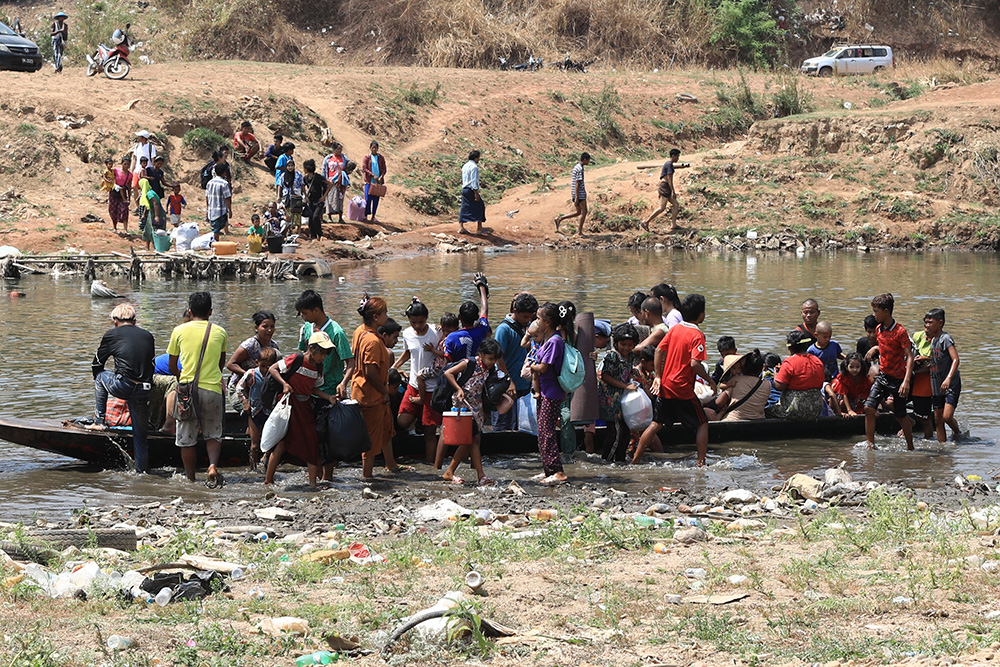
Myanmar’s internal conflict is one of the primary drivers of migration following the 2021 coup, creating a “Myanmar migration moment” as the movement of people within and out of Myanmar accelerated following the coup.[1] Displacement has both internal and cross-border dimensions, with consequent significant humanitarian needs. The UNHCR’s Operational Data Portal listed over 3.5 million internally displaced persons in Myanmar as of September 2025, and over 1.5 million refugees and asylum seekers (over 270,000 had arrived after the 2021 coup) in third countries as of August 2025.[2] Cross-border arrivals, whether via legal channels or as refugees, have also placed more stress on healthcare and social systems in host countries, especially Myanmar’s closest ASEAN neighbour, Thailand, which, since 2021, is now host to a substantial number of asylum seekers and migrants. The enforcement of the 2010 Military Service Law in early 2024 caused many young people, especially men, to seek ways and means to leave Myanmar to avoid forced conscription into the military in a time of conflict. Others joined resistance forces.[3] In early 2025, the military regime imposed further travel restrictions on conscription-age men.[4] This affected the motivations and options for potential migrants from Myanmar and added to their vulnerabilities in host countries concerning access to legal protection and social services. The Thai cabinet’s recent decision to allow long-staying Myanmar refugees to work legally in the country was welcome news for many migrants/refugees, and it raised hopes that this new policy decision might be further expanded for more recent arrivals.[5]
The Climate-Conflict Nexus
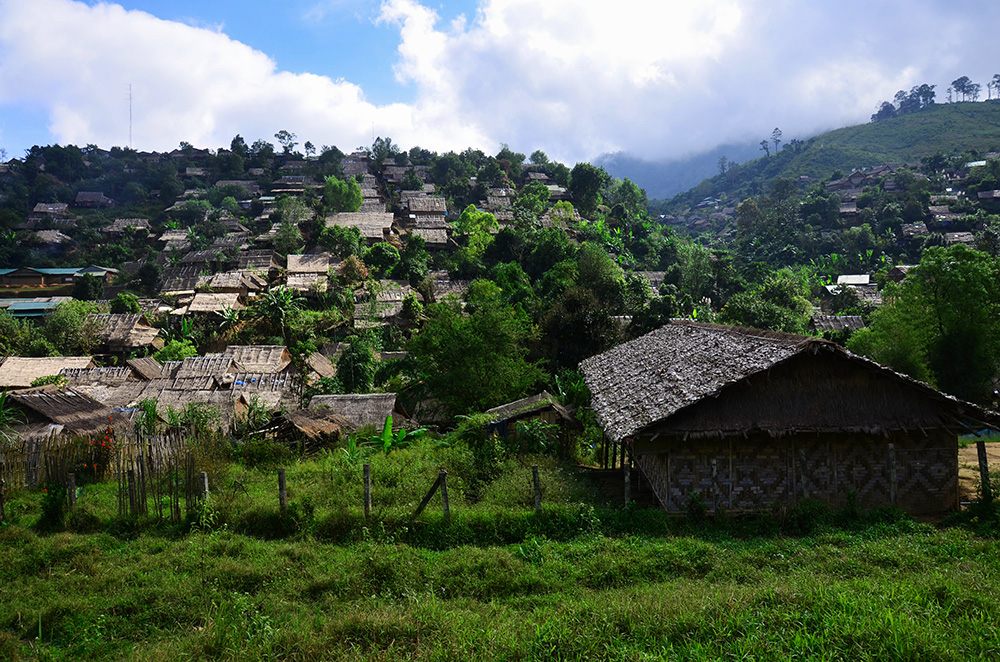
After the coup, analysts started raising concerns about Myanmar’s increased climate vulnerability, warning of the negative implications of suspending several important projects and initiatives aimed at climate change resilience and refocusing the economy on extractive industries.[6] An expert’s in-depth examination of the climate-conflict nexus in Myanmar[7] revealed that although Myanmar contributed minimally to global carbon emissions, it was still highly vulnerable to climate-related hazards. Current research-based projections indicated that significant portions of central Myanmar, home to 12 million people, could become uninhabitable due to extreme heat within the next few decades. The armed conflict that escalated after the 2021 coup further threatened livelihoods and food supplies, and complicated the need to address Myanmar’s climate security challenges. Limited international financing and governance challenges also add to the mutually reinforcing environmental and social instability cycle. Experts still hold some optimism for future effective climate action and disaster risk reduction in Myanmar to be addressed locally, engaging local and indigenous communities, aligning with federal principles of subsidiarity and the global trend toward localised climate finance, especially in conflict-affected and impoverished regions. However, in Myanmar’s current conflict-ravaged landscape, the more visible and immediate concerns related to the climate-conflict nexus are around food and livelihood security, as recurring and high-intensity natural disasters undermine agriculture. At the same time, illicit and conflict-related resource extractions may accelerate environmental degradation and further deepen social tensions and conflict.
Cybercrime and Security[8]
Cybersecurity, an emerging challenge for the region, is also an evolving and continuing challenge for Myanmar, linked inextricably to the rise of cybercrime and scam operations which target and recruit many citizens and nationals in Southeast Asia and beyond. Myanmar has been characterised as a hotbed for cybercrime due to the weak capacity to institute and enforce adequate cybersecurity measures that protect the population. Moreover, the limited reach of law and order in the gray zones in Myanmar’s periphery areas that border China and Thailand has added to the continued impunity of scam operations in these areas. Authorities in Myanmar have placed more emphasis on controlling the state’s surveillance and response capacity[9] and regime security (under the guise of national security) in areas under its administrative reach. Myanmar’s borderlands and various non-state ethnic armed actors are no strangers to illicit economic activities, nor to complex and symbiotic interactions with the Myanmar armed forces personnel; activities continued despite and amidst the 2021 coup and the COVID-19 pandemic. The current political instability in Myanmar adds to the gaps in on-paper provisions and on-ground realities. The patchwork of governance and territorial control in contested and periphery areas reveals the different motivations and agency of different security actors, ranging from those opposing the Myanmar military or resisting military rule to those actively supporting the military. Such a situation suggests that emerging and increasing cybersecurity dangers emanating from Myanmar’s borderlands threaten to become a cyclical issue exacerbated by political instability and weak governance or enforcement capacity.
Drug and Conflict Nexus
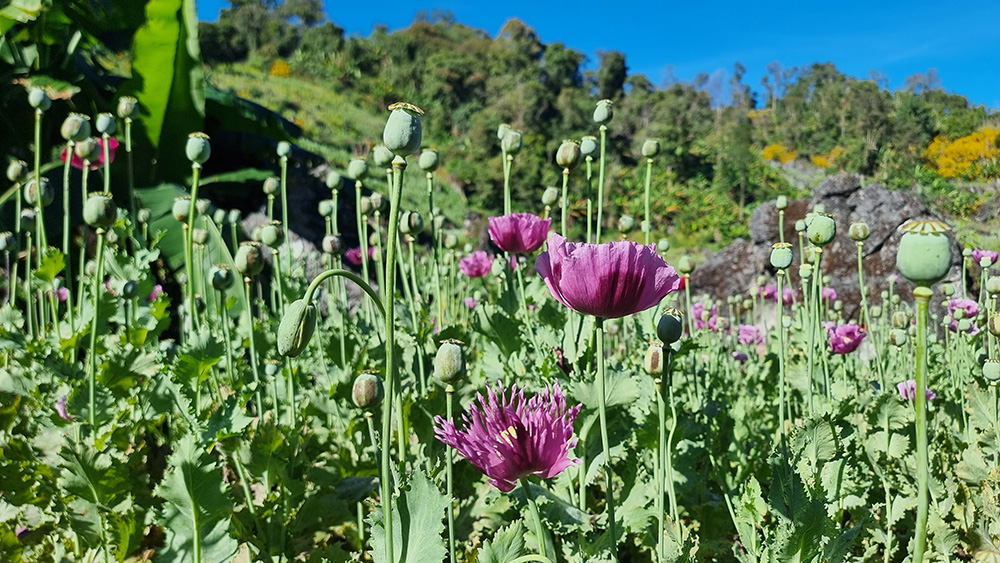
Before scams and cybercrime operations, the main transnational crime challenge associated with Myanmar was drug production and trafficking. Myanmar’s notoriety as a locus of drug production dates back to Cold War legacies that gave rise to the emergence of the Golden Triangle region,[10] synonymous with the illicit drug trade funding activities and operations of non-state armed actors in areas that have minimal governance reach. Collusion with rent-seeking authoritarian regimes negotiating ceasefires with a focus on negative rather than positive peace added to continuing illicit drug production, such that Myanmar was listed in 2023 as surpassing Afghanistan in opium drug production.[11] The Golden Triangle region, particularly Shan State in Myanmar, has also seen an unprecedented increase in production and trafficking of synthetic drugs, especially methamphetamine. This “explosive growth” is reflected in the “record amount” of seizures 236 tons, a 24% increase from 2023 and far more likely reaching markets.[12] The surge of instability across Myanmar following the 2021 coup gave transnational criminal groups more opportunities to exploit the breakdown in law enforcement and the increasing demand for resources to fund the civil war.
The Myanmar military, however, consistently attributes the challenge of illicit drugs and other transnational crimes to EAO-controlled areas resisting state interventions, and seeks to present the military as a responsible entity, working with external partners to address the challenges. Successive administrations in Myanmar have partnered, over decades, with the Drug Enforcement Administration (DEA) of the US government, and the United Nations Office on Drugs and Crime (UNODC) on narcotics drug eradication. And yet, drug production from Myanmar remains high, though with a reported decrease in 2024 from 2023, and with observed continued high levels of production since the UNODC first started measuring two decades ago.[13]
The security implications – both domestic and external – are stark; instability and conflict fuel and enable drug production and trafficking, and vice versa. The Myanmar military’s ceasefire deals in the 1990s and 2000s offered economic incentives to ethnic armed organisations in exchange for cessation of hostilities; some of these groups also came under the command structure of the Myanmar armed forces. The illicit economies and power dynamics arising from such ‘negative peace’ deals continue to fuel and benefit from the ongoing conflict in Myanmar today. A recent report by the Global Initiative against Transnational Organized Crime (GI-TOC), issued as part of the UN Security Council’s Illicit Economies Watch series, has detailed how, for the past 60 years, illicit economies have fuelled Myanmar’s insurgencies and conflicts, threatening human security as well as other security and peace concerns in Myanmar’s border areas. The report also cautions that after the 2021 coup, the increase of such illicit economies has further entrenched interests such that any attempts to act against those interests risk affecting peace and stability for the country.[14]
Conclusion
ASEAN has institutionalised regional mechanisms and responses to issues such as migration, climate change, drug trafficking, and other transnational crimes. Migration and climate change are among the priorities under the ASEAN Socio-Cultural Community 2025 Blueprint, while the ASEAN Political-Security Community 2025 Blueprint includes measures to address drugs and other transnational crimes as well as the emerging security concerns related to cybercrime. However, the obligation for ASEAN member states to implement these regional commitments assumes a situation with political stability and governance capacity. Myanmar’s present instability and the fragile or fragmented governance landscape in the country, however, require considering how ASEAN discussions in the different sectors of cooperation can address this unique situation in a member state unable to meet its regional commitments.
ASEAN’s overall efforts to mediate a political settlement for Myanmar under the Five-Point Consensus will also need to consider the implications of and for these issues emanating from Myanmar’s current instability. Regional and/or bilateral responses to Myanmar’s ongoing crisis since 2021 will thus need to be prepared to address Myanmar’s evolving security challenges, which also challenge collective security responses and preparedness within the region.
Moe Thuzar
Moe Thuzar is senior fellow and coordinator for Myanmar Studies Program at ISEAS Yusof Ishak Institute.
Notes –
[1] Aung Tun, “Migration in Post-coup Myanmar: A Critical Determinant in Shaping the Country’s Future?,” ISEAS Perspective 2022/37, ISEAS-Yusof Ishak Institute, 13 April 2022. https://www.iseas.edu.sg/articles-commentaries/iseas-perspective/2022-37-migration-in-post-coup-myanmar-a-critical-determinant-in-shaping-the-countrys-future-by-aung-tun/#:~:text=Since%20Myanmar’s%20February%202021%20military,a%20%E2%80%9CMyanmar%20migration%20moment%E2%80%9D.
[2] Operational Data Portal, “Myanmar Situation,” UNHCR. https://data.unhcr.org/es/situations/myanmar.
[3] Kyi Sin and Thida, “Conscription in Myanmar is Pushing Young Men to Choose Sides,” Fulcrum, ISEAS-Yusof Ishak Institute, 26 March 2024. https://fulcrum.sg/conscription-in-myanmar-pushing-young-men-to-choose-sides/.
[4] Democratic Voice of Burma, “Regime Imposes Travel Restrictions on Conscription Aged Men,” 31 January 2025. https://english.dvb.no/regime-imposes-travel-restrictions-on-military-conscription-aged-men/.
[5] United Nations, “Thailand Grants Work Rights to Long-term Refugees from Myanmar, UN Welcomes Resolution,” 26 August 2025. https://news.un.org/en/story/2025/08/1165721.
[6] Aung Tun, “ Myanmar’s Climate Crisis: Damaging Policies Need Reversal,” Fulcrum, ISEAS-Yusof Ishak Institute, 27 December 2021. https://fulcrum.sg/myanmars-climate-crisis-damaging-policies-need-reversal/.
[7] Ashley South, Conflict, Complexity & Climate Change: Emergent Federal Systems and Resilience in Post-coup Myanmar, Regional Center for Social Science and Sustainable Development, Chiang Mai University, 2021.
https://rcsd.soc.cmu.ac.th/publications/conflict-complexity-climate-change/.
[8] Observations in this section are condensed from the Myanmar case study for the East-West Center’s Cybersecurity in Southeast Asia. See, Moe Thuzar and Kyi Sin, “Cybersecurity in Myanmar: Concern across the Landscape,” East-West Center Asia Pacific Bulletin, 26 March 2025. https://www.eastwestcenter.org/publications/cybersecurity-myanmar-concern-across-landscape. See also, Moe Thuzar and Kyi Sin, “The Extraordinary Rise of Cybercrime Operations in Myanmar,” Lee Kuan Yew School of Public Policy, National University of Singapore, July 2024. https://scholarbank.nus.edu.sg/entities/publication/806affd9-0117-48b6-8d8d-d6441ba041f0.
[9] Tilleke and Gibbons, “Myanmar Issues Cybersecurity Law,” 9 January 2025. https://www.tilleke.com/insights/myanmar-issues-cybersecurity-law/10/.
[10] William Mellor, “In the Golden Triangle, Long-Dead Drug Warlords Hold Visitors in Thrall,” Nikkei Asia, 14 February 2024, https://asia.nikkei.com/Editor-s-Picks/Tea-Leaves/In-the-Golden-Triangle-long-dead-drug-warlords-hold-visitors-in-thrall.
[11] Nicholas Yong, “Myanmar Overtakes Afghanistan as Top Opium Producer, BBC, 12 December 2023. https://www.bbc.com/news/world-asia-67688413.
[12] United Nations Office on Drugs and Crime Press Release, “Rise in Production and Trafficking of Synthetic Drugs from the Golden Triangle, New Report Shows,” 28 May 2025. https://www.unodc.org/unodc/en/press/releases/2025/May/rise-in-production-and-trafficking-of-synthetic-drugs-from-the-golden-triangle–new-report-shows.html.
[13] United Nations Office on Drugs and Crime Press Release, “Myanmar Remains a Leading Source of Opium and Heroin,” 12 December 2024. https://www.unodc.org/unodc/press/releases/2024/December/myanmar-remains-a-worlds-leading-source-of-opium-and-heroin.html.
[14] Alastair Macbeath, Cashing in on Conflict: Illicit Economies and the Myanmar Civil War, Global Initiative on Transnational Organised Crime, March 2025. https://globalinitiative.net/wp-content/uploads/2025/03/Alastair-MacBeath-Cashing-in-on-conflict-Illicit-economies-and-the-Myanmar-civil-war-GI-TOC-March-2025.pdf.