
Climate change poses a grave threat to the long-term prosperity and security of Southeast Asia. In the 2025 State of Southeast Asia survey conducted by ISEAS-Yusof Ishak Institute, respondents for the first time ranked climate change and extreme weather events as the top challenges facing the region overtaking unemployment and economic recession, which had been the primary concern of majority of Southeast Asians in the past two years (Seah et al., 2025). In the 2024 Southeast Asia Climate Outlook, also published by ISEAS-Yusof Ishak Institute, 60 percent of the respondents believe that their lives will be greatly affected by climate change in the next 10 years (Seah et al., 2024). Among those who consider climate change as an immediate threat, respondents from the Philippines and Vietnam expressed higher levels of concern compared to the regional average.
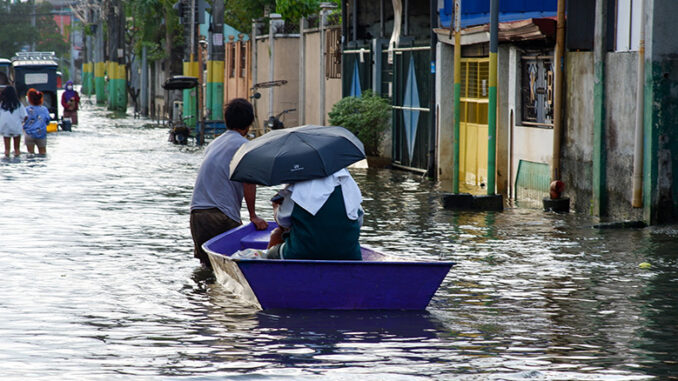
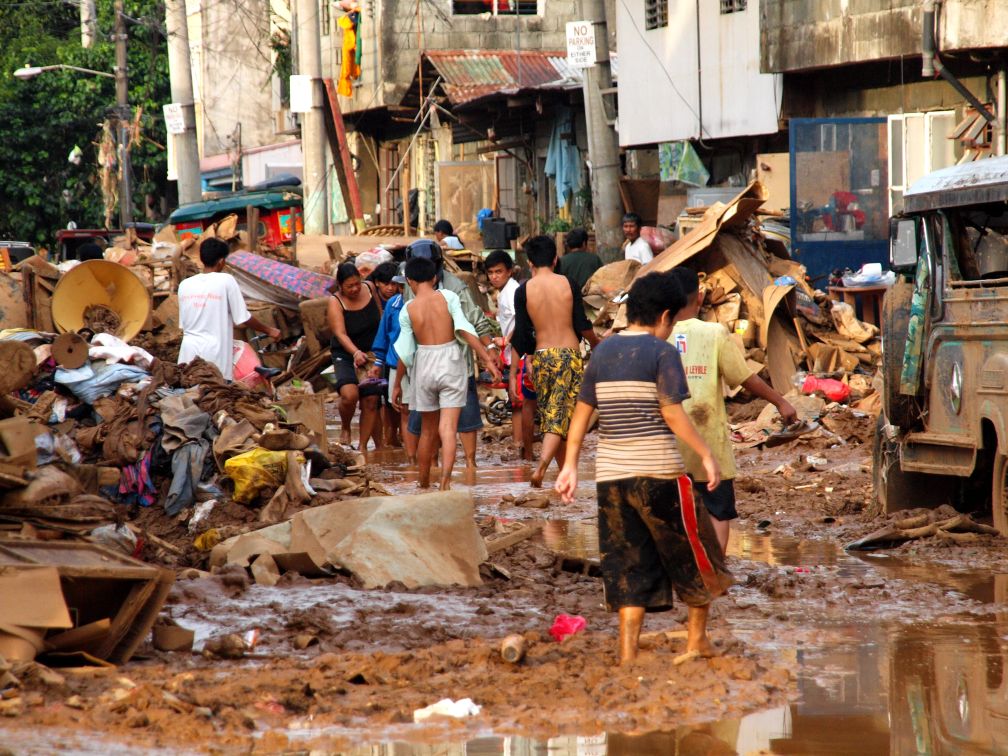
Climate-induced hazards disproportionately affect the poorest and most marginalized communities. For instance, flooding due to heavy rainfall affects most residents of Metro Manila, the capital of the Philippines, but urban poor communities are more exposed to risks because they often live in flood-prone areas. These communities are also more vulnerable because they lack the means to recover from disasters and emergencies. Of late, incessant flooding has angered many, and it led to calls for investigation of anomalous flood control projects.[1] In Myanmar, Cyclone Mocha in 2023 and Typhoon Yagi in 2024 worsened the situation of ethnic minorities, especially women and girls, who were internally displaced by escalating conflict between the military and those opposed to the February 2021 coup (Bauchner, 2023; Relief Web, 2024). These are but a few examples of how the first-order effects of climate change threaten the security and livelihood of peoples in the region. Beyond the primary effects, the climate-security nexus brings to mind the possibility of climate change causing or exacerbating forced displacement, civil unrest, conflict, and other security threats (McDonald, 2013). If the adverse effects of climate change are left unaddressed, ASEAN’s hard-won gains that brought about relative political stability and steady economic growth will be in jeopardy.
This article focuses on recent developments in ASEAN on climate change governance and how the current geopolitical landscape may affect regional cooperation on climate change. It also includes current efforts and plans of the Philippines regarding climate mitigation, adaptation, and diplomacy to achieve its climate goals and contribute to regional climate governance. Viewed from the lens of non-traditional security, climate change threatens not just the security of states and regional stability but also the survival of vulnerable communities.
Climate Change Governance in ASEAN
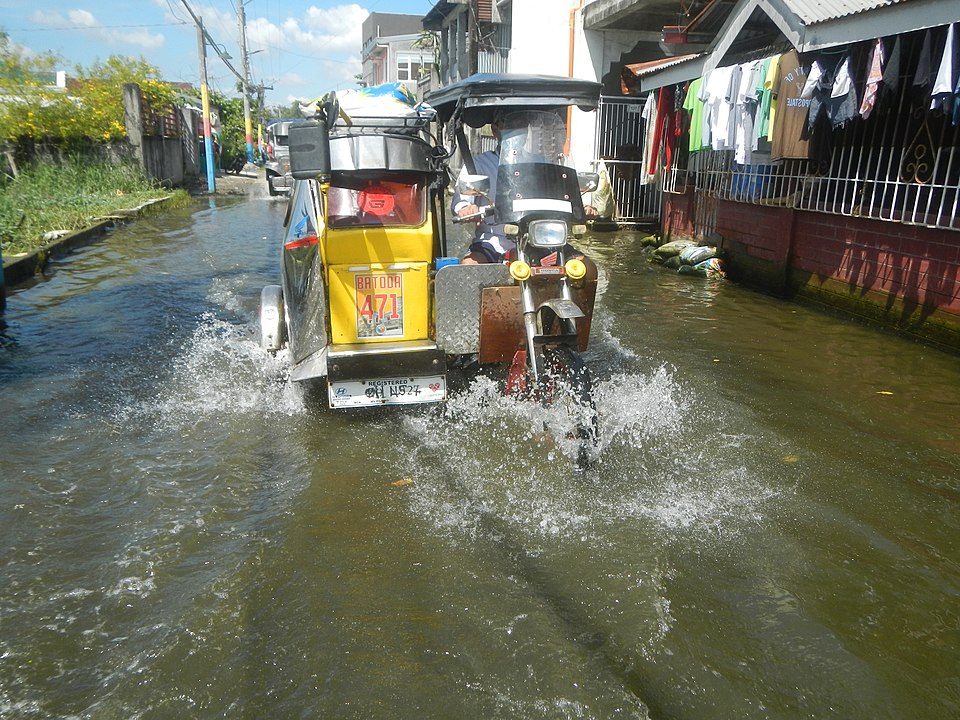
Since countries in the region face similar climate hazards, regional strategies can complement national and sub-national initiatives on reducing carbon emissions through mitigation efforts and increasing resilience to climate-related risks through adaptation measures. The long-term impacts of the climate change means that ASEAN plays an important role in developing regional initiatives. ASEAN has been fairly responsive as a bloc in acknowledging the issue of climate change. The organization has released joint declarations and statements since 2007 identifying common goals and interests. Dialogue within ASEAN and with interested external partners have been going on placing climate change in the agenda of many ASEAN meetings. To achieve a just transition to low-carbon growth, ASEAN’s main consideration is to promote climate actions that support and not impede socioeconomic development.
All ASEAN member states ratified the 2015 Paris Agreement on Climate Change and have come up with national plans. However, these plans mostly emphasize climate change mitigation over climate adaptation and resiliency. Moreover, inadequate regulatory capacity and limited funding hinder the full implementation of these plans (Krishnan et al., 2024). Despite having regional frameworks and mechanisms on climate change, most member states continue to underperform in reaching their climate change targets (Salazar & Katigbak, 2024). The 2024 Environmental Performance Index places most ASEAN member states at the bottom half of global rankings on climate change mitigation save for Thailand and Singapore pointing out the need for more stringent emissions reduction schemes (Block et al., 2024). On adaptation efforts, Singapore appears to be an outlier in the region given its low vulnerability score and high readiness score based on the Notre Dame Global Adaptation Initiative Country Index. Of the 10 member states, Myanmar, Cambodia, Laos, and the Philippines have high vulnerability scores and low readiness scores indicating the need for urgent actions to reduce climate risks and invest more to improve adaptive capacity.
Given their constrained financial capacity, ASEAN member states require assistance from developed countries on climate change. The Philippines and Indonesia have been vocal in pushing for higher and fairer climate finance to ensure equitable and accessible funding for vulnerable countries (Antara News, 2025; Lo, 2024). ASEAN’s Joint Statement on Climate Change at the 29th Conference of the Parties (COP29) held in Baku, Azerbaijan in November 2024 raised concerns over the slow progress of talks on climate finance and minimal funding flows for climate adaptation to developing countries. While there was an agreement at COP29 for developed countries to increase their climate finance provision to developing countries from $100 billion to $300 billion annually by 2035, this means that developing countries would still need to raise up to $1.3 trillion annually from the private sector and other sources by 2035. ASEAN is one with other developing countries in demanding that climate finance should consist of grants and, to a lesser extent, low-interest loans that minimize financial burdens on governments. Given the inadequacy of the climate finance flows from developed countries and multilateral financial institutions, ASEAN member states have to tap other funding sources for mitigation and adaptation programs.
There have also been talks on setting up a carbon tax market. Singapore is leading this initiative, although the other member states are in varying stages of policy development (Das, 2025). Currently, only Singapore and Indonesia have established carbon pricing policies (Rakhiemah et al., 2024). ASEAN also has a strategy for carbon neutrality to move the region toward green transition, which has the potential to unlock huge social and economic benefits. To achieve these goals, ASEAN needs to support its members in addressing implementation gaps in their climate actions especially on finance, technology development and transfer, and capacity building, including the development and implementation of low emission technologies, and an enabling infrastructure. ASEAN also announced in August 2023 the establishment of the ASEAN Centre for Climate Change (ACCC) in Brunei Darussalam to facilitate regional cooperation and coordination on climate change initiatives.
All these ongoing efforts stress that an effective ASEAN response requires actions at each level of governance. The localized nature of climate impacts requires climate action to take place both at the national and sub-national levels. At the same time, mitigation contributes to global efforts in reducing emission. Beyond the “mitigation is global, adaptation is local” paradigm (Burton, 2011, 481), regional efforts have to emphasize the transnational nature of climate risks spanning transboundary ecosystems and shared resources, flow of trade and investments, and people, among others.
Philippines Responses to Climate Change
As for the Philippines, its National Security Policy 2023-2028 declares climate change resiliency as a national security interest, acknowledging that climate-induced and geological hazards can destabilize socio-political and economic systems. Hence, enhancing climate and disaster preparedness and preventing environmental degradation are necessary measures to reduce threats to well-being, which is at the core of national security.
The National Adaptation Plan (NAP) 2023-2050 aims to build resilience, minimize climate-related loss and damage, and enhance the adaptive capacity of key sectors. The NAP also identified strategies that recognize the cross-sectoral aspect of adaptation: (1) improve resilience of critical infrastructure, (2) protect people’s livelihood using social safety nets and climate-responsive policies, (3) enable local governments and communities to implement solutions, (4) promote collaboration among stakeholders, policymakers, and institutions, and (5) prioritize nature-based solutions where possible. On climate mitigation, the Philippines designed its pathway to low-carbon growth as a function of adaptation. It pegged 72 percent of its nationally determined contributions (NDCs) contingent on international assistance through climate finance, technology transfer, and capacity development. Thus, achieving its NDCs requires the use of diplomacy to establish partnerships supportive of its climate goals.
On climate diplomacy, the Philippines led some initiatives such as serving as the host country for the Fund for Responding to Loss and Damage (FrLD) Board and requesting the International Court of Justice (ICJ), along with 90 other countries, to provide clear legal guidance on the obligations of states to reduce emissions, protect human rights, and promote global security. At COP29, the Philippines signed the agreement to be the host country of the FrLD Board. This fund operationalizes international assistance to vulnerable countries in responding to economic and non-economic loss and damage associated with climate change such as extreme weather events. President Ferdinand Marcos, Jr. swiftly signed the enabling law in August 2024 granting legal personality and capacity to the FrLD Board. On July 23, 2025, the ICJ issued a landmark advisory opinion which provides that state parties to the United Nations Framework Convention on Climate Change (UNFCCC) have an obligation to adopt measures on climate mitigation and adaptation, and that Annex I parties or developed countries should lead climate actions, among others. In line with these diplomatic efforts, Philippine Senator Loren Legarda proposed that the country take the lead in global climate action similar to the 2015 Manila Call to Action on Climate Change, which set the stage for the 2015 Paris Agreement.
Climate and Geopolitics
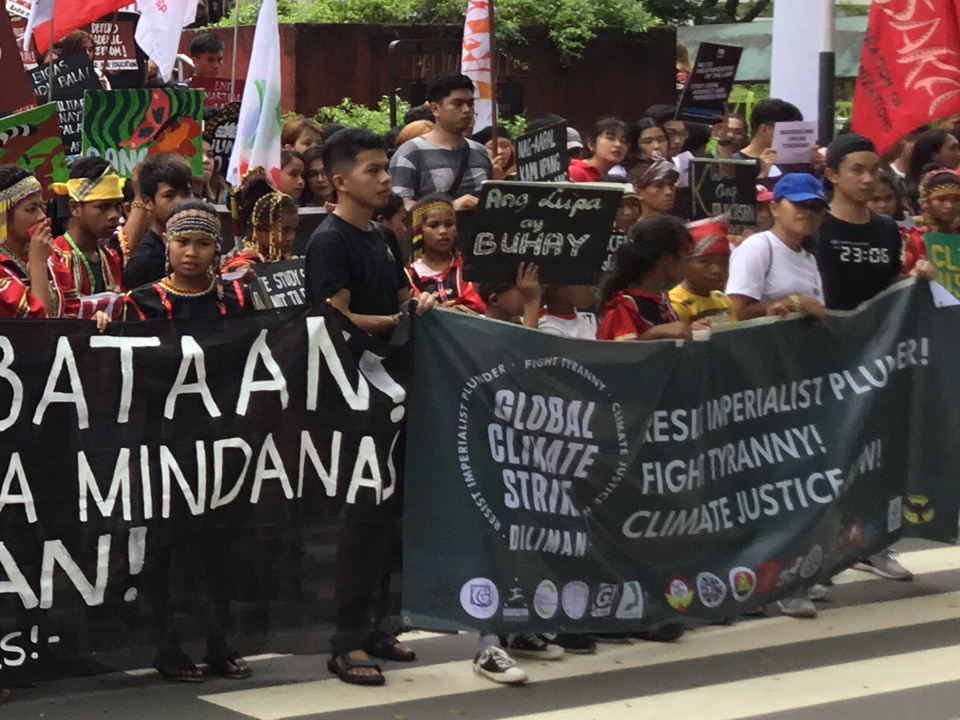
All these national and regional efforts are happening in the context of US-China great power competition, which affects the region by causing geopolitical tensions, national security concerns, and geoeconomic challenges. For one, the imposition of reciprocal tariffs by the US and the retaliatory tariffs from other states will disrupt the global clean technology supply chain. Cooperation between the US and China on climate change is essential, but the sidelining of climate change in the US-China bilateral agenda and the US withdrawal from the Paris Agreement are major setbacks in regional and global climate action. Developing countries, particularly those in the region, have a lot to gain if China and the US can jointly assume leadership to drive global climate progress.
US President Donald Trump also rescinded an earlier pledge to contribute $4 billion to the Green Climate Fund (Mathiesen, 2025) setting a precedent for other developed countries to do the same. Following President Trump’s insistence, member states of the North Atlantic Treaty Organization (NATO) pledged to increase their defense spending to five percent of their annual gross domestic product by 2035 (Letzing, 2025). Even if NATO members do not make good on this commitment, many European governments now recognize that they have to increase their defense budgets. To do so, these governments will have to cut back on other spending. Their allocations for official development assistance and climate finance will surely take a hit. Without the assistance from Europe and the US, the pool of available funding and technology gets smaller making it even more challenging for Southeast Asian states to mobilize resources to achieve their climate goals.
While most analysts and scholars think about climate change as a threat multiplier or an issue tradeoff meaning an issue that creates instrumental tradeoffs with other military and economic priorities, an altered landscape mode of thinking might be helpful moving forward (Colgan, 2021). The altered landscape approach, wherein climate change is not just a single issue but a pervading background condition that affects all other issues, might enable policymakers and stakeholders to conduct a more comprehensive and strategic way of handling international cooperation and competition. Another useful frame in understanding current developments is the concept of climate security, which deserves some attention in ASEAN’s official discourse given the inevitability of conflicts arising due to climate impacts (Caballero-Anthony, 2024) and the broad implications of great power competition in the region. Examining climate change from a systemic lens reveals the interconnectedness and complexity of risks to a highly vulnerable region.
Virgemarie A. Salazar
Assistant Professor at the Department of Political Science, University of the Philippines Diliman.
References –
Antara News. (2025, July 15). “Indonesia to Champion Climate Finance, Leadership at COP30.” https://en.antaranews.com/news/366393/indonesia-to-champion-climate-finance-leadership-at-cop30.
Bauchner, S. (2023, May 18). “Cyclone Mocha Devastates Myanmar’s Rohingya.” Human Rights Watch. https://www.hrw.org/news/2023/05/18/cyclone-mocha-devastates-myanmars-rohingya.
Block, S., Emerson, J., Esty, D. C., de Sherbinin, A., & Wendling, Z. (2024). 2024 Environmental Performance Index. Yale Center for Environmental Law & Policy. https://epi.yale.edu/downloads/2024-epi-report-20250106.pdf.
Burton, I. (2011). “Adaptation to Climate Change: Context, Status, and Prospects.” In, J. D. Ford & L. Berrang-Ford (Eds.), Climate Change Adaptation in Developed Nations, Vol. 42: 477–483. Springer Netherlands. https://doi.org/10.1007/978-94-007-0567-8_35.
Caballero-Anthony, M. (2024). “Climate Security in Southeast Asia: Navigating Concepts, Approaches and Practices.” Third World Quarterly, Vol.45(14): 2047–2064. https://doi.org/10.1080/01436597.2024.2370353.
Climate Change Commission. (2023). Implementation Plan for the Republic of the Philippines Nationally Determined Contributions 2020-2030. https://climate.gov.ph/knowledge/ph-ndc-implementation-plan-2020-2030.
Climate Change Commission. (2023a). National Adaptation Plan of the Philippines 2023-2050. https://climate.gov.ph/knowledge/ph-nap-2023-2050.
Colgan, J. (2021). Climate Change, Grand Strategy, and International Order. Wilson Center. https://diplomacy21-adelphi.wilsoncenter.org/article/climate-change-grand-strategy-and-international-order.
Das, S. (2025, February 22). “The Case for Carbon Taxes in Southeast Asia.” East Asia Forum. https://eastasiaforum.org/2025/02/22/the-case-for-carbon-taxes-in-southeast-asia/.
Krishnan, G., Kumari, S., & Subramaniam, S. (2024). “Access to Finance: Issues and Challenges to ASEAN.” ASEAN Secretariat. https://asean.org/wp-content/uploads/2024/11/ASCC-RD_Trend-Report_CC6-2024.pdf.
Letzing, J. (2025, July 3). “The Price of Security: Europe is Set Up for a Serious Challenge.” World Economic Forum. https://www.weforum.org/stories/2025/07/europe-defence-recall-difficult-past-nato/.
Lo, K. (2024, November 18). “Philippines Leads Urgent Negotiations for Scaled-Up Climate Finance in COP 29 Amid A String Of Destructive Typhoons.” Department of Finance. https://www.dof.gov.ph/philippines-leads-urgent-negotiations-for-scaled-up-climate-finance-in-cop-29-amid-a-string-of-destructive-typhoons/
Mathiesen, K. (2025, February 5). “Trump Rescinds $4B in US Pledges for UN Climate Fund.” POLITICO. https://www.politico.eu/article/donald-trump-rescind-4-billion-us-pledge-un-climate-fund/.
McDonald, M. (2013). “Discourses of Climate Security.” Political Geography, Vol.33: 42–51. https://doi.org/10.1016/j.polgeo.2013.01.002.
National Security Council. (2023). “National Security Policy 2023-2028.” https://www.surrey.ac.uk/sites/default/files/2024-09/2023_Philippines.pdf.
Rakhiemah, A. N., Zharifah, N., Shidiq, M., Pradnyaswari, I., Rizaldi, M. I., & Suryadi, B. (2024). Progress of Carbon Pricing in ASEAN to Support the Shift Towards a Low Carbon Economy. Policy Brief No. 1, ASEAN Centre for Energy. https://accept.aseanenergy.org/progress-of-carbon-pricing-in-asean.
Relief Web. (2024, November 20). “Floods Typhoon Yagi—Operation Update #2 (MDRMM021)—Myanmar.” https://reliefweb.int/report/myanmar/myanmar-floods-typhoon-yagi-operation-update-2-mdrmm021.
Salazar, V., & Katigbak, J. J. P. (2024). “Can ASEAN’s Governance of Climate Change Become Participatory?” In, Global Trends in Governance and Policy Paradigms (pp. 1–24). IGI Global Scientific Publishing. https://www.igi-global.com/chapter/can-aseans-governance-of-climate-change-become-participatory/344197.
Santos, J. F. D. (2025, September 7). “WRAP: Anger over “Ghost” Flood Control Projects Overflows onto the Streets.” ABS-CBN. https://www.abs-cbn.com/news/nation/2025/9/7/wrap-anger-over-ghost-flood-control-projects-overflows-onto-the-streets-2222.
Seah, S., Lin, J., Martinus, M., Fong, K., Thao, P. T. P., & Aridati, I. Z. (2025). The State of Southeast Asia 2025 Survey Report. ISEAS Yusof Ishak Institute. https://www.iseas.edu.sg/wp-content/uploads/2025/03/The-State-of-SEA-2025-1.pdf.
Seah, S., Martinus, M., Huda, M. S., Ludher, E. K., Len, C., & Jiahui, Q. (2024). Southeast Asia Climate Outlook 2024 Survey Report. ISEAS Yusof Ishak Institute. https://www.iseas.edu.sg/wp-content/uploads/2024/08/SEACO24-Report-final.pdf.
Notes –
[1] There have been allegations that some legislators received huge kickbacks from overpriced or substandard flood control projects (Santos, 2025).