
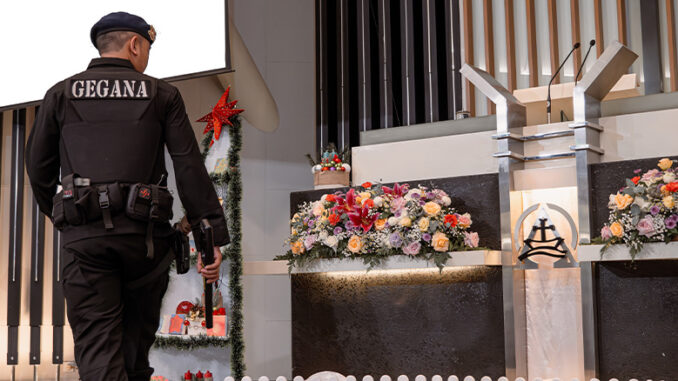
Terrorism is undoubtedly hazardous to the national security and social harmony of any country in the world, including Indonesia. Yet, although an important issue, terrorism is not the only factor contributing to national insecurity and social disharmony in society. Indonesia is not exceptional in this regard. Multiple forms of violence–verbal or nonverbal, physical or symbolic, and political or cultural–outside terrorism have mushroomed in the country, before, during, and, most importantly, after the downfall of President Suharto in 1998. Suharto (1921-2008) was Indonesia’s dictatorial ruler who reigned and controlled the country for more than three decades since he led the 1965-6 anti-Communist campaign and the bloody coup d’etat.
There are plenty of cases of violence and extremism outside terrorism, which is also a form of violence and radicalism, in the modern social history of Indonesia. One of the types of violence and radicalism threatening intergroup relations, social harmony, and peaceful coexistence of Indonesia’s diverse society includes inter- and intra-religious intolerance, intimidation, persecution, and bullying, among others.
However, regrettably, the Indonesian government seems to take terrorism seriously while neglecting or paying less attention to multiple acts and forms of religious violence and intolerance, marked or indicated by, for instance, a lack of the government’s financial, structural, and institutional support. The Indonesian government has made various efforts, programs, and activities to counter and combat terrorist acts, propaganda, and ideology, as well as to deradicalize the terrorists and to help reintegrate them into society. Yet, the government does not take the same measures to tackle intolerance. Certainly, terrorism indeed needs to be handled properly, so does religious intolerance.
Terrorism and the Full Support of Counterterrorism
On October 12, 2002, Indonesia witnessed the Bali bombings, the most spectacular terrorist attack, committed by several Muslims of Javanese and Malaysian origins, in the modern history of this archipelagic country. Two powerful bombs ripped through the busiest nightspots in the Kuta area of the Indonesian tourist island of Bali, known as the Island of Gods (Pulau Dewata). Reportedly, the Bali blasts killed 202 people and injured more than 300 people, mostly Australians, followed by Indonesians, British, and other nationalities, making the tragedy the largest terror attack, not only in the social history of Indonesia but also in Southeast Asia.
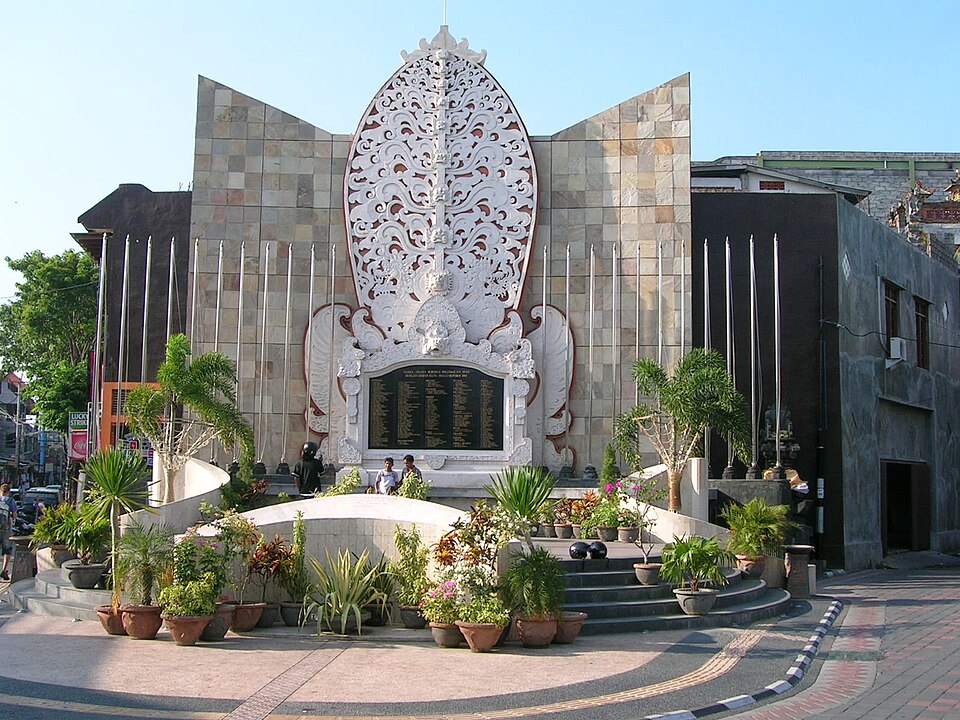
Although violence is not new to Bali, which was historically colored with multiple tragic events (Robinson, 1995), the terrorist bombing was new to Pulau Dewata. Since the Bali blasts, multiple sporadic terrorist acts, including suicide bombings, have taken place in various places, including Jakarta, Solo (Surakarta), Cirebon, Surabaya, Sidoarjo, Pontianak, and Samarinda. Some Indonesian terrorists have ties with international or regional terrorist groups, such as al-Qaeda, Islamic State of Iraq and Syria, or Jama’ah Islamiyah; others are more locally based (e.g., linked to Negara Islam Indonesia), or lone offenders (Chernov-Hwang, 2018; Schulze, 2018).
It is imperative to note that the Bali bombings were not the first terrorist attacks in the country’s social history, either committed by Islamists or other radical groups. After Indonesia gained its independence in 1945, various radical groups and individuals from multiple backgrounds with multiple interests, motives, and objectives committed terrorist attacks involving shootings or bombings. Occasionally, the terrorist acts were also carried out by “lone terrorists” (“lone wolves”) having nothing to do with any radical group. Lone terrorists committed terrorism for various reasons, including business competition or vengeance, not necessarily to establish an Islamic state or to topple unjust rulers (Solahudin, 2013).
In 2003, following the deadly Bali bombings, the government created an anti-terror unit, named Detasemen Khusus 88 (known as Densus 88, the Special Detachment 88). Later, in 2010, the government established Badan Nasional Penanggulangan Terorisme (BNPT, the National Agency for Counter Terrorism), a counterterrorism agency. In addition, the government also issued several laws and regulations on prohibiting and combating terrorism.
Densus 88, an elite unit of the Indonesian National Police (Polri) counterterrorism squad, focuses on investigating, hunting, and tackling terrorism-related crimes and activities (Wibawana, 2022). Preventing, mitigating, and countering violent extremism (i.e., terrorism) has been Densus 88’s focal point since Bali’s terrorist attack in 2002. BNPT, moreover, is a non-ministerial government institution having a similar status to the ministry, in which its head is directly responsible to the President.
While Densus 88’s main strategies involve using “hard approaches” (e.g., attacks on terrorist hideouts), BNPT’s primary strategies utilize “soft approaches” to prevent, mitigate, and eradicate terrorism in Indonesia through various programs, including training on deradicalization and counter-radicalism. Since its inception, BNPT and its affiliates have been actively conducting workshops, public lectures, and seminars on the dangers of terrorism and the efforts of counterterrorism at universities, governmental institutions, business enterprises, social organizations, and youth clubs. Furthermore, BNPT provides some funds for ex-terrorists to start their businesses, help them find jobs, and assist them in re-integrating into society.
In addition to the establishment of Densus 88 and BNPT, the government also issues several laws and regulations related to terrorism and counterterrorism, such as (1) Perppu No. 2/2002 on Combating Criminal Acts of Terrorism, (2) UU No. 15/2023 on Combating Terrorism, (3) Undang-Undang No. 17/2011 concerning state intelligence and its role in intercepting and conducting surveillance on any kind of suspicious communication it deems potentially endangering and threatening national security, (4) UU No. 9/2013 on Prevention and Eradication of Terrorism Financing Criminal Acts, and (5) UU No. 5/2018 on Eradication of Criminal Acts of Terrorism, a revised version of the 2003 law (Al Qurtuby 2022, 248). In brief, believing in the threat of terrorism to the country’s national security and society’s safety, the central government has made serious efforts to combat terrorism through a mixture of hard and soft counterterrorism strategies and tactics.
Religious Intolerance and the Lack of Counter-intolerance Initiatives
Beyond the deadly terrorist attacks on public spaces depicted earlier, Indonesia has also been marked by the presence of religious radicalism, anti-pluralist movements, and intolerant actions, threatening the country’s ethnoreligious plurality, civic peace, and national security. Suharto’s fall has also triggered various forms of physical/direct violence in multiethnic, multilingual, multicultural, and multireligious Indonesia, including but not limited to terrorism, secessionism-driven violence, religious intolerant acts, communal riots, pogroms, violent jihadism, vigilantism, and violent sectarianism, committed by multiple actors (political, ethnic, or religious groups).
The Denny JA Foundation reported that after the fall of Suharto’s New Order, there were some 2398 cases of physical violence and intolerance in Indonesia, 65 percent of which had religious backgrounds and motives (Kompas, 2020). Some cases of this violence are categorized as very high, marked with thousands of deaths and injuries, such as the Christian-Muslim communal strife in Maluku, Central Sulawesi, and North Maluku, or interethnic brawls (e.g., between the Dayak and Madurese) in Kalimantan, while others are typified as low-medium with small casualties or only minor property damages. Andreas Harsono, an activist of Human Rights Watch, estimates that at least 90,000 people were killed in mostly communal violent conflicts (not terrorism) in the decade after Suharto’s collapse (Harsono, 2019).
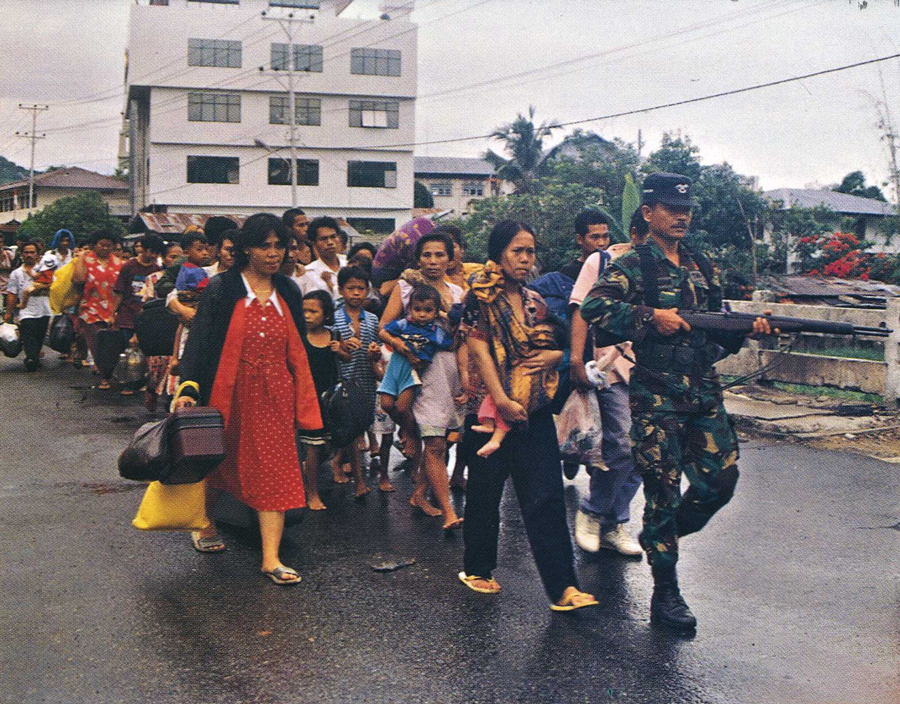
Compared to terrorist acts, which are usually ad hoc and temporal, those of intolerance are more prevalent and regular. There are far more cases of religious intolerance than those of terrorism. Although the data vary, according to the Public Virtue Research Institute, from 2000 to 2020, there were nine cases of terrorist bombings[1] (CNN Indonesia, 2021). There are certainly other forms of terrorism, but whatever types of terrorism, the data shows that acts of religious intolerance, including violations of religious freedom (known as Kebebasan Beragama dan Berkeyakinan or KBB for short), far surpass the terrorist acts.
For example, in 2024 alone, according to the Setara Institute, a Jakarta-based noted non-university research institution, there were 477 incidents of religious intolerance and defilements of religious freedom, including intimidation, persecution, burning or destroying properties of other faiths, bullying, rejection of public worship rituals conducted by certain religious groups, refusal of the founding of worship places (mostly, churches), etc. The data shows the increase in intolerant cases from the previous year, which were 329 cases in 2023 (Ashfiya 2025).
In contrast with actors of terrorism, those of religious intolerance, bullying, intimidation, and persecution are more wide-ranging, coming from multiple agencies of both state (e.g., government officials, security apparatus, parliament members, etc.) and non-state actors (e.g., religious groupings, civil associations, or ordinary masses). The Setara Institute also notes that, in 2024, around 39.5 percent (159 cases) of actors of religious intolerance and violators of KBB came from the government (state actors), while 60.5 percent (243 cases) came from non-government or non-state actors.
Moreover, casualties of religious intolerance (both humans and properties) are far more varied and complex than those of terrorism, partly because terrorists usually target specific places (e.g., churches, police stations, hotels belonging to a specific group of people, embassies of certain countries, or buildings symbolizing the West) and people (e.g., Westerners, police personnel, Christians, etc.). In contrast, the perpetrators of religious intolerance can target any sites (worship places, houses, schools, offices, buildings, etc.) and people of any faith (Muslims and non-Muslims alike), allegedly deemed deviant and permissible to attack and destroy.
Although religious violence and intolerance have spread across the country and have been a ubiquitous phenomenon in today’s Indonesia, causing countless victims and the destruction of many valued properties belonging to certain religious communities, no such government body or unit to counter religious violence and intolerance. Unlike cases of terrorism, in which the government, along with the legislature and security forces, quickly responds to the phenomenon by establishing multiple counterterrorism units and squads, as well as pouring out huge funds, the government’s responses to many cases of religious intolerance and radicalism across the archipelagic country remain unclear and ambiguous.
Until now, no substantial funds have been allocated by the government to fight against the culprits of religious intolerance and social disharmony. The government also does not establish counter-intolerance units. The so-called Forum Kerukunan Umat Beragama (FKUB), a nationwide forum for interreligious harmony (founded in 2006), was initiated by regional governments and local religious leaders, based on common, shared regulations of the Ministry of Home Affairs and the Ministry of Religious Affairs (Peraturan Bersama Menteri No. 8 and 9). Yet, FKUB has a small budget for its programs. Unlike terrorism cases, the Indonesian president does not issue a specific law to “scale up” the status of FKUB, though Yaqut Cholil Qoumas, a former minister of religious affairs, tried to do so in 2022 (Andrios 2022).

Between Terrorism and Religious Intolerance: Concluding Remarks
Based on the description and analysis sketched above, dealing with religious intolerance is more urgent than that of, or as urgent as, terrorism, which has been quite absent in recent years, following the massive hunt by the state apparatus and intense training and programs on terrorist rehabilitation, deradicalization, and integration by the government.
Unfortunately, notwithstanding the enormous cases of religious intolerance, including violations of KBB, the government seems reluctant to deal with this issue, or only takes partial, sporadic, unsystematic actions to address these pressing, troubling issues for the country’s security, safety, and harmony. Indeed, the Ministry of Religious Affairs has Pusat Kerukunan Umat Beragama (the Center for Interreligious Harmony, now headed by M. Adib Abdushomad, an Australian-trained scholar), but it is only a small unit within the ministry with tiny funds, a lack of authority, and limited roles. Nonetheless, Abdushomad has created creative programs related to interreligious relations, peace, and tolerance, including the Harmony Award, podcasts, and outreach to rural areas, among others. The center also launches an application called Si-Rukun (“The Harmony”), an early warning system to prevent religious-based social tension and violence.[2]
It is, thus, a high time for the central government to pay more attention to overcoming religious intolerance, alongside terrorism, by providing sufficient structural, institutional, legal, and financial support to combat intolerant actions, religious or non-religious (e.g., ethnic) based, for the betterment and improvement of Indonesia’s peace, security, safety, and harmony in the future.
Sumanto Al Qurtuby
Senior Lecturer in the Graduate Program of the Sociology of Religion, Faculty of Theology, Satya Wacana Christian University.
References –
Al Qurtuby, Sumanto. 2022. Terrorism and Counter-terrorism in Saudi Arabia and Indonesia. London: Palgrave.
Andrios, Benny. 2022. “Menag: Kemenag Usulkan Perpres Pembentukan FKUB Pusat.” https://kemenag.go.id/nasional/menag-kemenag-usulkan-perpres-pembentukan-fkub-pusat-jtlwmw.
Ashfiya, Dilla Agustin Nurul. 2025. “Kasus Intoleransi di Indonesia: Jumlah, Penyebab, Pelaku, dan Contohnya.” GoodStats, 10 July. https://goodstats.id/article/intoleransi-agama-di-indonesia-HdiJw.
Chernov-Hwang, Julie. 2018. Why Terrorists Quit: The Disengagement of Indonesian Jihadists. Ithaca: Cornell University Press.
CNN Indonesia. 2021. “Daftar Kasus Ledakan Bom di Indonesia Dua Dekade Terahir,” 28 March. https://www.cnnindonesia.com/nasional/20210328150157-20-623072/daftar-kasus-ledakan-bom-di-indonesia-2-dekade-terakhir.
Harsono, Andreas. 2019. Race, Islam, and Power: Ethnic and Religious Violence in Post-Suharto Indonesia. Australia: Monash University Publishing.
Kompas. 2020. “Kasus Kekerasan yang Dipicu Masalah Keberagaman di Indonesia.” https://www.kompas.com/skola/read/2020/02/06/190000569/kasus-kekerasan-yang-dipicu-masalah-keberagaman-di-indonesia.
Robinson, Geoffrey. 1995. The Dark Side of Paradise: Political Violence in Bali. Ithaca, NY: Cornell University Press.
Schulze, Kirsten E. 2018. “The Surabaya Bombings and the Evolution of the Jihadi Threat in Indonesia.” CTC Sentinel, July, pp,1-6.
Solahudin. 2013. The Roots of Terrorism in Indonesia: from Darul Islam to Jema’ah Islamiyah. Ithaca, NY: Cornell University Press.
Wibawana, Widhia Arum. 2022. “Apa Itu Densus 88? Pengertian, Sejarah, Tugas, dan Fungsi.” Detik News, 29 October. https://news.detik.com/berita/d-6375591/apa-itu-densus-88-pengertian-sejarah-tugas-dan-fungsi.
Notes –
[1] These terrorist bombings included the following: the Bali bombing I (2002), the JW Marriot bombing (2003), the Bali bombing II (2005), the Ritz Carlton bombing (2009), the bombing of Masjid Az-Dzikra Cirebon (2011), the Sarinah bombing (2016), the bombing at the city police headquarters of Surakarta (2016), the Kampung Melayu bombing (2017), the Surabaya bombing (2018), and the Sidoarjo bombing (2018) (Schulze 2018).
[2] Online conversation with M. Adib Abdushomad, Head of the Center for Interreligious Harmony, the Ministry of Religious Affairs, 28 September 2025.